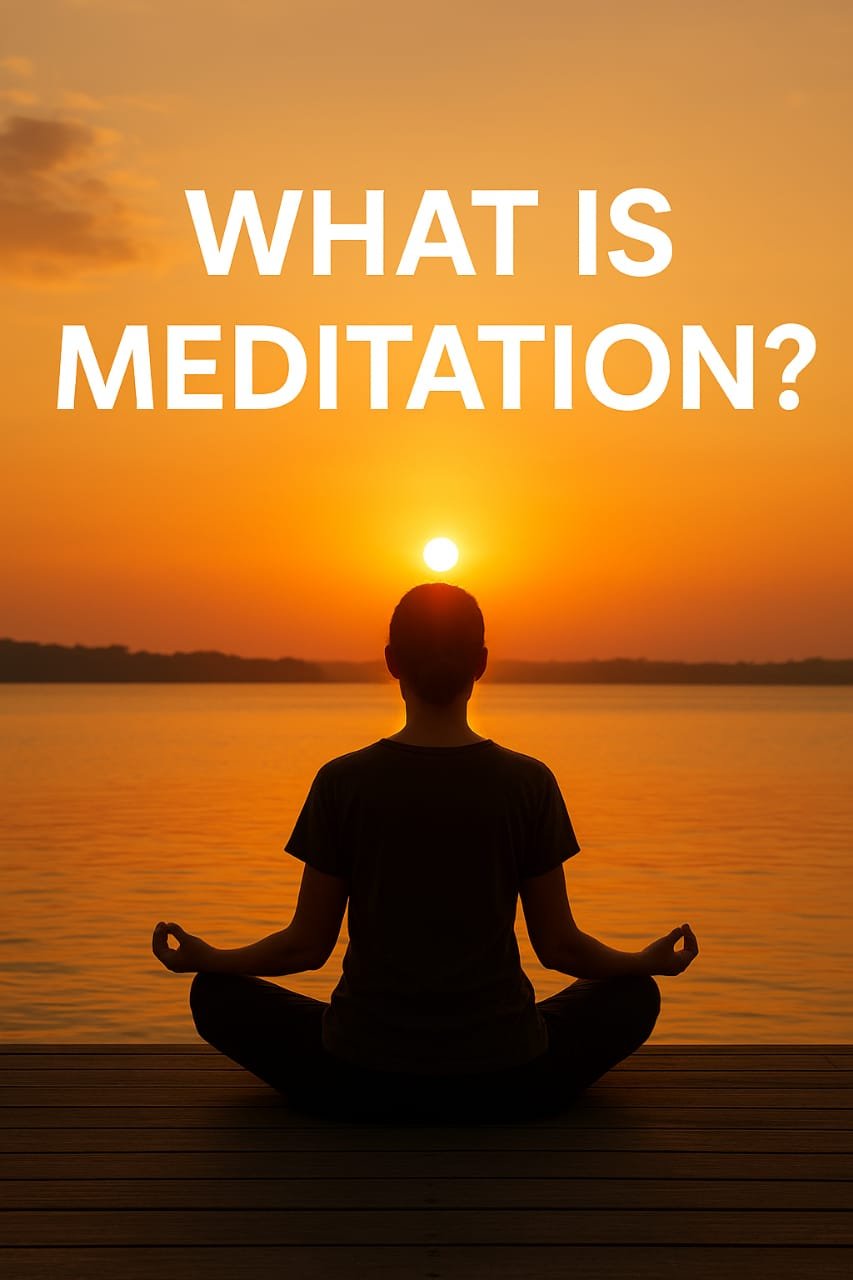
What Is Meditation? A Beginner’s Guide
Curious about meditation but unsure where to begin? This guide explains what meditation is, how it works, its benefits, myths, and downsides for complete beginners. Discover practical steps to start your practice with Japjot Kaur—no prior experience needed.
What Is Meditation? The Gentle Path to Inner Clarity
Meditation is the art of turning inward, a timeless practice that invites you to sit with your breath, observe your thoughts, and cultivate a sense of presence. At its essence, it’s not about silencing the mind or achieving some mystical state—it’s about meeting yourself where you are, with kindness and curiosity. Rooted in ancient traditions from Buddhism, Hinduism, and beyond, meditation has evolved into a universal tool for anyone seeking calm amid life’s storms.
As Japjot Kaur, whose name embodies the “light of meditation,” I’ve witnessed how this simple act can illuminate even the darkest corners of the mind. For the complete beginner, meditation feels like dipping your toes into a still pond—initial ripples of doubt give way to profound stillness. It’s a conversation with your inner self, free from judgment, that builds resilience one breath at a time.
In this guide, we’ll explore meditation’s true nature, how it unfolds in your body and mind, its transformative benefits, potential challenges, and myths that often deter newcomers. Whether you’re overwhelmed by daily chaos or simply yearning for deeper awareness, this is your compassionate entry point. Let’s begin with openness and ease.
How Does Meditation Work? Understanding the Inner Mechanism
Meditation operates like a gentle trainer for the mind, rewiring neural pathways through focused attention and awareness. When you meditate, you direct your focus to a single anchor—often the breath, a mantra, or bodily sensations—creating space between you and your thoughts. This isn’t suppression; it’s observation, allowing patterns of worry or distraction to surface and pass without attachment.
The Science Behind It
When you meditate, your brain waves change. Research from the Cleveland Clinic shows that even short sessions activate the prefrontal cortex, the area responsible for focus and decision-making. It also lowers cortisol, the stress hormone, helping your body shift from “fight or flight” to “rest and digest.”
For beginners, it starts with breath awareness. You inhale deeply, exhale slowly, and notice when your mind wanders—then gently return to the breath. Over time, this builds mental resilience, like strengthening a muscle. No chanting or lotus position required; a simple chair works fine.
As a beginner myself once, I remember my first session: sitting quietly for 2 minutes felt endless. But that small step sparked a habit that brought lasting calm. It’s not magic—it’s consistent, gentle redirection.
The Proven Benefits of Meditation: A Life-Changing Shift
Meditation’s rewards extend far beyond the cushion, touching every facet of well-being. Backed by decades of research, its effects are both immediate and profound, making it a cornerstone for holistic living.
- Emotional Resilience and Stress Reduction: The American Psychological Association (APA) highlights that meditation decreases symptoms of anxiety and depression by 30-40% in regular practitioners, fostering a buffer against life’s pressures. It teaches equanimity, the ability to respond rather than react.
- Enhanced Focus and Cognitive Clarity: A study in Psychological Science found meditators show improved attention spans, with up to 16% better performance on concentration tasks. This translates to sharper productivity and fewer mental fog moments.
- Physical Health Improvements: The Mayo Clinic reports meditation lowers blood pressure, eases chronic pain, and strengthens the immune system by reducing inflammation markers. Even beginners notice better sleep within weeks, as it regulates the body’s circadian rhythms.
- Deeper Self-Awareness and Compassion: Long-term practice cultivates insight into one’s patterns, leading to greater self-compassion and empathy toward others. Johns Hopkins research links it to reduced age-related memory loss, promoting a vibrant, connected life.
These benefits aren’t reserved for experts; they unfold gradually for all who persist. In my own path as Japjot Kaur, meditation has been the quiet anchor amid change, revealing joys hidden in the ordinary. It’s a gift that ripples outward, enriching relationships and purpose.
Potential Downsides and Realistic Challenges: No Practice Is Perfect
While meditation is overwhelmingly positive, acknowledging its challenges ensures a grounded approach. For beginners, the path isn’t always serene—it’s human.
Common Challenges
- Restlessness and Frustration: The mind rebels at first, wandering to to-do lists or doubts. This “monkey mind” phase can last weeks, feeling like failure, but it’s a sign of progress—awareness is awakening.
- Emotional Intensity: Suppressed feelings may surface, leading to temporary discomfort or tears. This is healing, not harm, but if overwhelming, pair it with journaling or professional guidance.
- Consistency Hurdles: Life’s busyness can disrupt routines, and skipping days feels discouraging. The key is compassion—start with 2 minutes if 5 feels daunting.
Rare Downsides
NCCIH notes that in less than 1% of cases, intense practice might trigger anxiety in those with untreated mental health conditions—always consult a doctor if needed. Otherwise, downsides are minimal, often outweighed by gains.
As a guide, I remind you: Meditation isn’t about flawlessness; it’s about showing up. Embrace the wobbles—they’re part of the unfolding.
Myths About Meditation: Clearing the Path for Beginners
Misconceptions keep many from starting. Let’s dispel them with clarity.
Myth 1: “You Must Empty Your Mind Completely”
Truth: Meditation is observation, not erasure. Thoughts arise; you note them and return to your anchor, like waves on a shore. Cleveland Clinic confirms this gentle return builds focus over time.
Myth 2: “It’s Only for Spiritual or Religious People”
Truth: Meditation is secular and adaptable—used by athletes for performance, executives for decisions, and anyone for calm. It’s a skill, not dogma, as Harvard Health emphasizes.
Myth 3: “It Takes Hours to Benefit”
Truth: Even 5 minutes yields results, per Mayo Clinic studies showing reduced stress after one session. Consistency trumps duration.
These myths fade with experience. Remember, every master was once a beginner—your first breath is victory.
How to Start Meditation: Your First Gentle Steps
Embark with ease—no pressure, just curiosity. Here’s a beginner’s roadmap.
- Choose Your Anchor: Begin with breath—it’s always available. Sit comfortably, eyes closed or soft gaze.
- Time It Gently: Set a timer for 3-5 minutes using a phone or free app like Insight Timer.
- Breathe Mindfully: Inhale for 4 counts, exhale for 4. Notice the rise and fall of your chest. When distracted, return softly—no self-criticism.
- End with Reflection: Open your eyes, note how you feel. Journal one word: “Calmer? Clearer?”
- Build Gradually: Aim for daily, but forgive skips. Track in a notebook for motivation.
Tools to explore: Calm app’s free trials or YouTube’s guided audios. As Japjot Kaur, my advice: Treat it like a kind friend, not a task. The magic lies in the return.
Embracing Your Meditation Path: A Final Invitation
Meditation is a lifelong companion, a quiet revolution that unfolds one breath at a time. From its essence as mindful awareness to its gifts of resilience and joy, it’s a practice that meets you exactly as you are. You’ve now glimpsed its depths—may this spark your own light.
What’s holding you back from your first session? Share in the comments, or explore more in my Meditation & Mindfulness section. Subscribe for weekly nudges toward peace, and remember: The journey begins with one inhale.
With warmth,
Japjot Kaur